It's Foxtail Season: Enjoy the Outdoors, But Be Aware
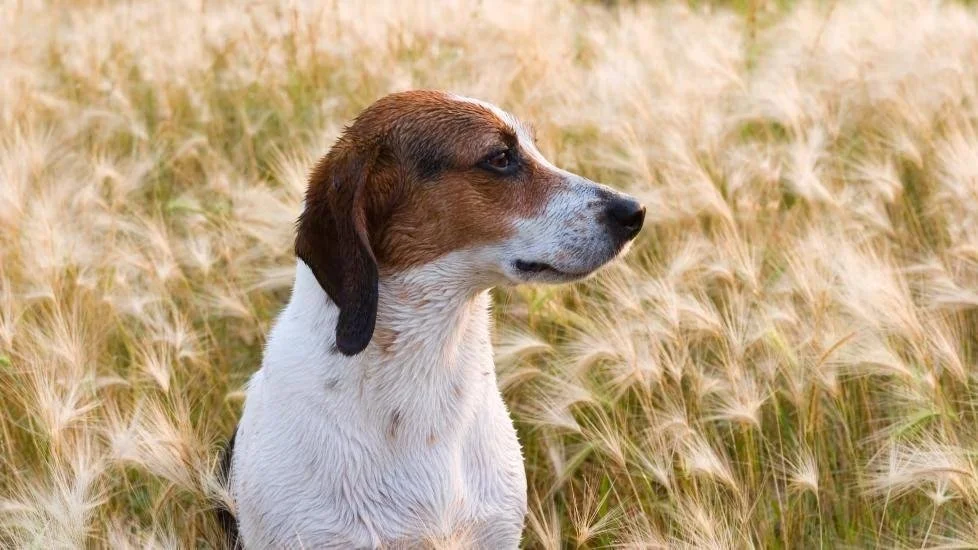
When in doubt or when there are signs of a foxtail invasion, visit your vet. This time of year and into the summer, all animal caregivers are on heightened foxtail alert.
After California’s winter rains, spring ushers in warm, dry days and invitations to take long walks and hikes along the paths and trails of our foothills, parklands, and open spaces with our four-legged friends.
This is also foxtail season, however, as wild grasses dry out and the sticky foxtail seeds become a risk for pets who venture outside.
Just as we need to be aware of ticks while walking and hiking in high, dry grass, says Shann Ikezawa, DVM, with Walnut Creek Veterinary Hospital, pet owners need to be aware of the dangers of foxtails and other sticky barbed wild grasses that can cause problems for our pets.
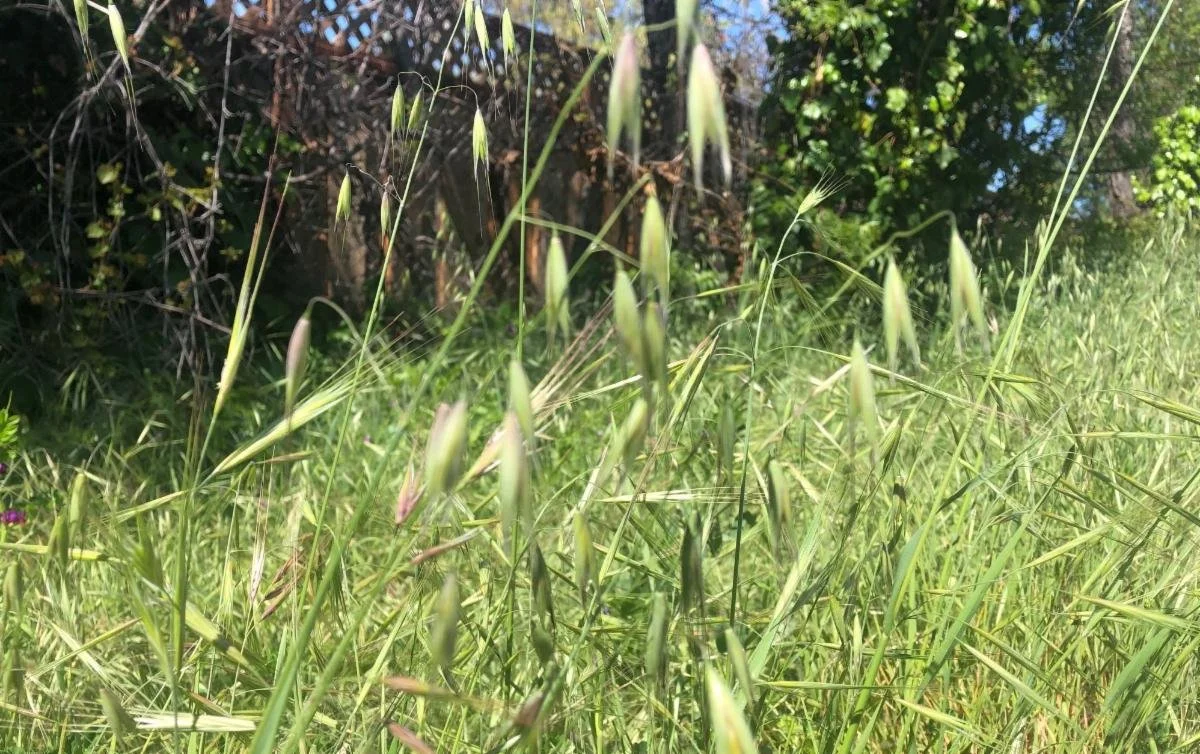
Foxtail grasses are in full bloom along paths and in open fields after the winter rains.
According to Dr. Ikezawa, while foxtails that hitch a ride during romps in tall grasses are most commonly found on the coats, between the toes, and in the ears, noses, and eyes of dog and cats, these hitchhikers can find their way to any and all orifices.
Foxtails are sticky by design, so their seeds will initially stick to fur as dogs and cats walk through high, dry foxtail and other prickly grasses.
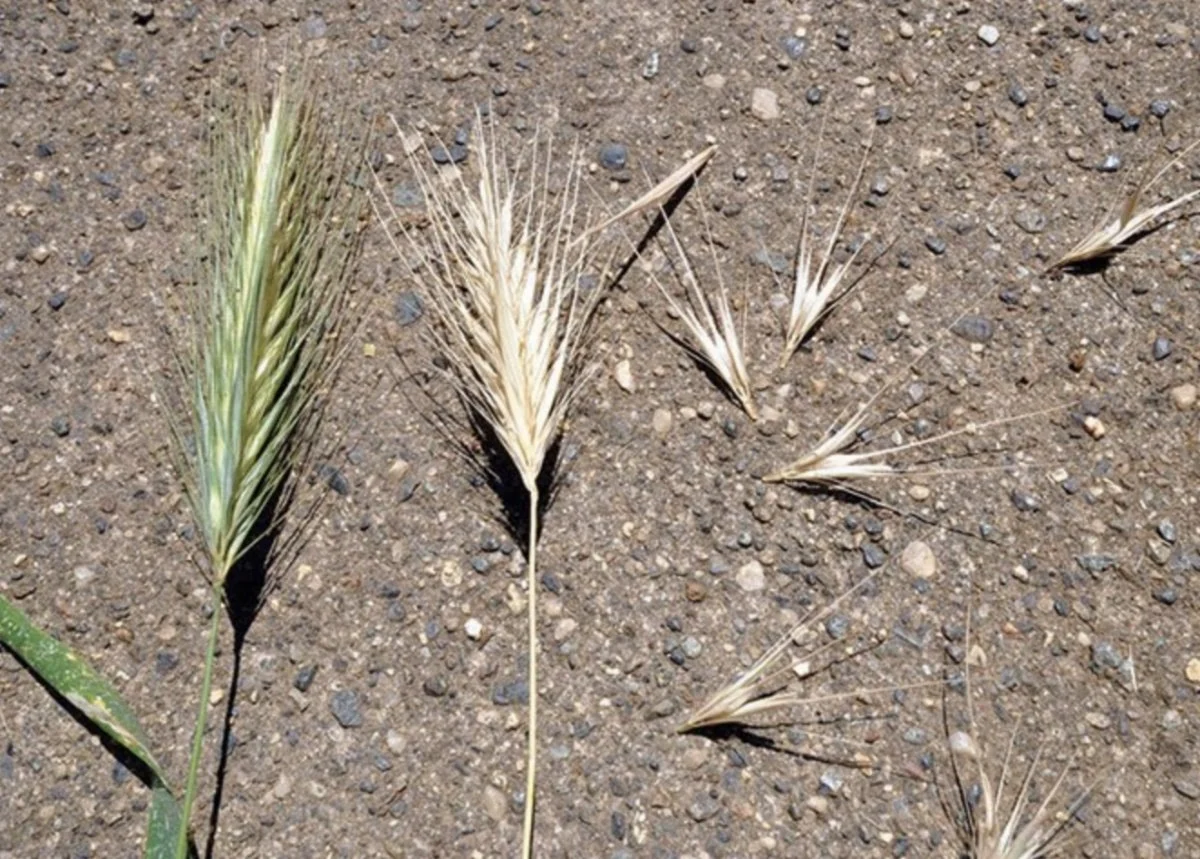
Dry, sticky foxtails serve as a means of seed dispersal, and animals are the ideal vehicle to transport the barbed seeds to new locations.
"The seeds are shaped like arrows, and once attached to the fur, can easily penetrate the skin," says Dr. Ikezawa. "Their hooked barbs prevent the seeds from coming out, so they can migrate through the body and into noses, ears, and eyes, making them difficult to locate once the skin has been pierced.”
The danger occurs when foxtails are ignored or missed upon inspection, and become embedded, which can lead to painful infections and abscesses that require veterinary care. Prevention is the best course.
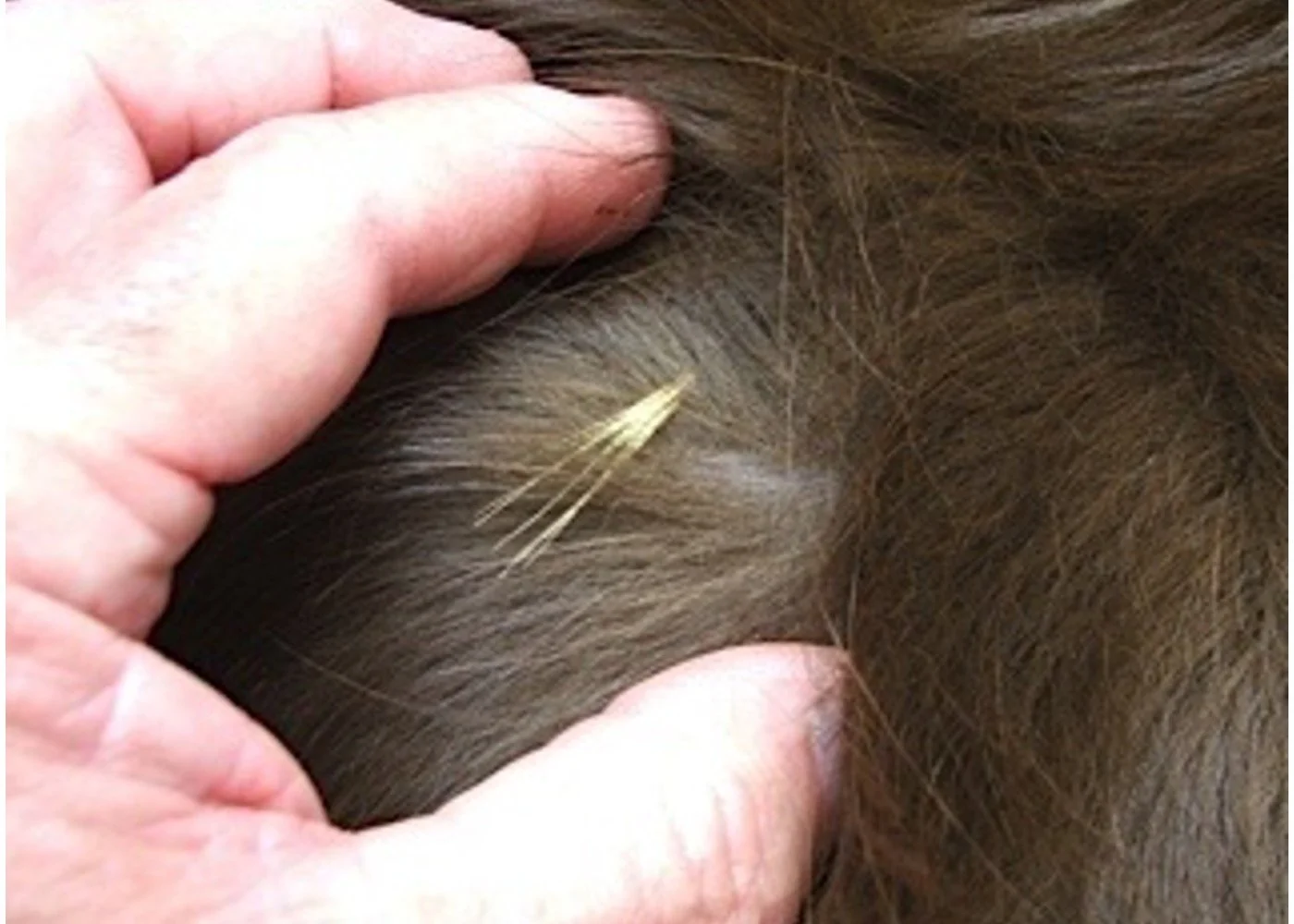
When removing the foxtail seed yourself, make sure to remove the whole seed; any remaining bit of barb can migrate through your pet's body
• Trim coat and fur around paws and openings, leaving less fur for foxtails to cling to.
• Avoid areas where foxtails are present; stay on paved paths.
• After a walk, check pets for evidence of foxtails on the coat and feet, between the toes, and all around the face — from top to bottom, head to tail. Remove foxtails immediately before they migrate into the animal’s skin.
• Look for aggressive sneezing, squinting, scratching at the ear, shaking of the head, and lumps on the skin that are painful to the touch.
There are products on the market that protect a dog’s face, shielding eyes, ears, nose, and mouth with a breathable nylon mesh face shield, much like face masks that protect horses from flies and biting insects.
When in doubt or when there are signs of a foxtail invasion, visit your vet. This time of year and into the summer, all animal caregivers are on heightened foxtail alert.